Picture this: you’re planning a trip to the United States and you walk into your local currency exchange to convert your Euros into Dollars. The rate on the board says 1.08 — meaning for every Euro you hand over, you receive $1.08 in return. You complete the transaction, pocket your Dollars, and head to the airport.
What you’ve just done, in its most basic form, is a Forex trade.
Now scale that up to $7.5 trillion in daily transactions, add banks, hedge funds, multinational corporations, central banks, and millions of individual traders operating simultaneously across every timezone on earth — and you have the Foreign Exchange market. The biggest, most liquid, most continuously active financial marketplace that has ever existed.
And here’s the part that surprises most newcomers: it’s open to you.
This guide cuts through the jargon and gives you a genuine, practical understanding of how Forex trading works — from the very basics all the way through to how experienced traders think about the market and profit from it.
The Foreign Exchange Market: What It Actually Is
The Foreign Exchange market — universally shortened to Forex or FX — is a global, decentralised marketplace where the world’s currencies are continuously bought and sold. Unlike the New York Stock Exchange or the London Stock Exchange, there is no central building, no trading floor, no single exchange. Forex operates as an over-the-counter (OTC) market, meaning transactions happen directly between participants through a network of banks, brokers, and electronic trading platforms.
This decentralised structure is precisely why Forex never sleeps. When the trading day ends in New York, Tokyo is already open. When Tokyo closes, London picks up. When London winds down, New York takes over again. The result is a seamless 24-hour cycle, five days a week, from Sunday evening through to Friday night.
This is fundamentally different from stock markets, commodities exchanges, or bond markets — all of which have fixed opening and closing times. In Forex, the market is always moving, always reacting, always creating new opportunities.
📎 Overview of the global Forex market — Bank for International Settlements
Why Do People Trade Forex?
Before diving into the mechanics, it’s worth understanding what draws people to currency trading in the first place. There are several compelling reasons:
Accessibility — You can open a Forex trading account with a regulated broker from almost anywhere in the world, often with a relatively small initial deposit. The barrier to entry is far lower than many other financial markets.
Liquidity — With trillions of dollars changing hands every day, major currency pairs can be bought and sold almost instantaneously at quoted prices. You’re rarely stuck in a position because there’s no buyer or seller.
The ability to profit in both directions — In stock markets, most retail investors profit only when prices rise. In Forex, you can just as easily profit when a currency falls by “going short” — selling a pair with the intention of buying it back at a lower price. Markets move up and down; Forex lets you trade both directions with equal ease.
Around-the-clock trading — For those who work conventional hours, the Forex market’s evening and overnight sessions mean trading opportunities exist outside of the standard working day.
Leverage — Forex brokers offer leverage, allowing traders to control positions significantly larger than their account deposit. This amplifies both potential gains and potential losses, which is why understanding risk management is non-negotiable from day one.
Currency Pairs: The Building Blocks of Forex
Every Forex trade involves simultaneously buying one currency and selling another. This is expressed through what’s called a currency pair — written as two three-letter currency codes separated by a slash.
Take GBP/USD as an example. GBP is the British Pound (the base currency — the one you’re buying or selling). USD is the US Dollar (the quote currency — the one you’re paying with or receiving). If GBP/USD is trading at 1.2750, it means one British Pound is worth 1.2750 US Dollars.
If you believe the Pound is going to strengthen against the Dollar — perhaps because strong UK economic data is expected — you buy GBP/USD. If your view is correct and the rate climbs to 1.2900, you close the trade and pocket the difference. If the rate drops to 1.2600 instead, you’ve taken a loss.
The Three Tiers of Currency Pairs
Major pairs are the most heavily traded currency pairs in the world, all involving the US Dollar. Because the Dollar is the world’s reserve currency and is involved in roughly 88% of all Forex transactions, USD pairs dominate the market in terms of volume, liquidity, and analyst coverage.
The seven major pairs are: EUR/USD, GBP/USD, USD/JPY, USD/CHF, AUD/USD, USD/CAD, and NZD/USD.
Minor pairs (also called cross pairs) don’t include the US Dollar but pair other major currencies against each other. Examples include EUR/GBP, EUR/JPY, GBP/AUD, and CHF/JPY. These pairs typically have slightly wider spreads than majors but can offer strong trading opportunities, particularly around economic events in the relevant countries.
Exotic pairs combine a major currency with the currency of a smaller or emerging economy — such as USD/MXN (Dollar vs Mexican Peso) or EUR/TRY (Euro vs Turkish Lira). Exotics come with significantly wider spreads, lower liquidity, and higher volatility. They are generally not suitable for beginners.
For anyone starting out, EUR/USD and GBP/USD are the natural first choices. Both offer razor-thin spreads, enormous liquidity, rich availability of analysis and educational content, and highly predictable responses to major economic events.
📎 Currency pair guide — Babypips School of Pipsology
Forex Terminology You Need to Know
The Forex world has its own language. Getting comfortable with these terms early will make everything else click far more quickly.
Pip — The Unit of Price Movement
A pip (Percentage in Point) is the standard unit used to measure price changes in currency pairs. For most pairs, one pip equals a movement of 0.0001 — the fourth decimal place. So if EUR/USD moves from 1.0820 to 1.0845, that’s a 25-pip movement.
For Japanese Yen pairs, where prices are quoted to two decimal places, one pip equals 0.01.
Pips are how traders calculate profit and loss. Understanding how much each pip is worth — based on your lot size and the pair you’re trading — is fundamental to knowing your risk on any given trade.
Lot — Your Position Size
Forex is traded in standardised units called lots. A standard lot represents 100,000 units of the base currency. A mini lot is 10,000 units. A micro lot is 1,000 units. Most retail brokers now offer the ability to trade in fractional lots too, giving you precise control over your exposure.
The lot size you choose directly determines how much each pip movement is worth in real money. Larger lots mean larger profits on winning trades — and larger losses on losing ones.
Spread — The Cost of Trading
When you look at a Forex quote, you’ll see two prices: the bid (the price at which you can sell) and the ask (the price at which you can buy). The difference between these two prices is the spread — and it’s the primary way brokers earn money on retail trades.
A tight spread means lower trading costs. EUR/USD, being the most liquid pair in existence, typically has spreads of less than one pip with competitive brokers. More exotic pairs can have spreads of ten pips or more, making frequent trading very expensive.
Leverage — The Double-Edged Sword
Leverage allows you to open a position worth far more than the money in your account. A broker offering 1:30 leverage means that for every £1 of your own capital, you can control £30 of market exposure. With £1,000 in your account, you could open a position worth £30,000.
This magnification works in both directions with perfect symmetry. A 2% gain on a £30,000 position generates £600 — a 60% return on your £1,000 deposit. A 2% loss on that same position wipes out £600 — more than half your account.
Leverage is not inherently dangerous, but it demands respect and rigid risk management. Regulators in the UK and Europe cap retail leverage at 1:30 for major pairs for exactly this reason.
Margin — Your Collateral
When you open a leveraged position, your broker sets aside a portion of your account balance as margin — essentially a good-faith deposit to cover potential losses. This amount is locked while the trade is open. If your losses erode your remaining free margin below a minimum threshold, your broker issues a margin call and may close your positions automatically.
Understanding margin is critical. Many beginners mistake margin for a trading fee — it isn’t. It’s collateral that is returned to your available balance when the trade closes.
Going Long and Going Short
Going long simply means buying — you’re purchasing the base currency and expecting it to rise in value. Going short means selling — you’re selling the base currency and expecting it to fall. This ability to profit in falling markets is one of Forex’s most distinctive features and opens up opportunities regardless of which direction the market is trending.
📎 Full Forex glossary — Investopedia
What Makes Currency Prices Move?
This is where Forex gets genuinely fascinating. Unlike a company’s share price, which is ultimately tied to that company’s earnings and prospects, a currency’s value reflects the entire economic and political health of a nation — and in many cases, global sentiment toward risk itself.
Interest Rates and Central Banks
No single factor drives currency markets more consistently than interest rates. When a country’s central bank raises rates, it makes holding that currency more attractive to international investors seeking yield. Capital flows in, demand for the currency rises, and its price goes up.
This is why every interest rate decision from the US Federal Reserve, the European Central Bank, the Bank of England, or the Bank of Japan is treated as a major market event. Even hints about future rate changes — tucked into central bank statements or speeches — can cause significant price movement.
Economic Data Releases
Every week, governments and statistical agencies release economic data that reveals the state of their economies: employment figures, inflation readings, GDP growth rates, retail sales numbers, manufacturing output, and more. Traders compare each release against market expectations — and it’s the surprise in the data, not the number itself, that typically drives the biggest moves.
A stronger-than-expected US jobs report strengthens the Dollar. A weaker-than-expected UK inflation print pressures the Pound. Knowing when these releases are due — and what the market is expecting — is why the economic calendar is an essential daily tool for active Forex traders.
Inflation
Inflation sits at the heart of monetary policy. Rising inflation typically pushes central banks toward higher interest rates, which — as covered above — supports a currency. But persistently high inflation that a central bank fails to control can eventually undermine confidence in that currency altogether. It’s a nuanced dynamic that requires watching both the data and the central bank’s response to it.
Geopolitical Events and Risk Sentiment
Political uncertainty, elections, trade disputes, military conflicts, and global crises all influence currency prices. During periods of heightened uncertainty, traders tend to move money into so-called safe-haven currencies — the US Dollar, the Japanese Yen, and the Swiss Franc — and away from higher-risk, commodity-linked currencies like the Australian Dollar or Canadian Dollar.
Understanding risk sentiment — whether the market is in “risk-on” or “risk-off” mode — is a skill that develops with experience and market observation.
The Four Forex Trading Sessions
The 24-hour nature of Forex is one of its biggest advantages, but not every hour of the day offers equal opportunity. The market is organised around four major geographic sessions, each with its own character.
Sydney kicks off the trading week as Asian markets open on Monday morning local time. Activity is generally light during this session, though AUD and NZD pairs see the most relative movement.
Tokyo follows, bringing the full weight of Asian financial markets online. JPY pairs — particularly USD/JPY and GBP/JPY — are most active during this window. Liquidity is moderate, and moves tend to be more contained than in later sessions.
London is the powerhouse. The UK capital is responsible for more Forex trading volume than any other financial centre on earth, accounting for roughly a third of all global daily turnover. When London opens, spreads tighten, volume surges, and the major currency pairs begin making their most significant daily moves. EUR/USD and GBP/USD are most alive during the London session.
New York overlaps with London for several hours each afternoon (European time), creating the single most active and volatile window of the entire trading day. The majority of major US economic data hits during New York hours, which is when the biggest opportunities — and the biggest risks — consistently emerge.
For traders focusing on EUR/USD and GBP/USD, the London session and the London–New York overlap represent the prime trading hours of any given day.
📎 Forex market hours explained — Forex.com
Building Good Habits From Day One
The traders who survive and eventually thrive in Forex aren’t necessarily the ones with the sharpest analytical minds or the most sophisticated strategies. They’re the ones who build the right habits early and stick to them when the pressure is on.
Trade with a plan, not a feeling. Every trade you take should have a defined reason for entry, a pre-set stop-loss to limit your downside, and a target price for taking profit. If you can’t clearly articulate why you’re entering a trade, you shouldn’t be entering it.
Risk a fixed, small percentage per trade. The professional standard is 1–2% of your account balance per trade. At 1%, it would take 50 consecutive losing trades to lose half your account — giving you enormous room to learn, adjust, and improve without blowing up.
Use a demo account until your strategy is consistently profitable. Real money changes the psychology of trading completely. Anxiety, greed, and fear all become real forces. Spend meaningful time in a risk-free demo environment first — not just a few days, but weeks or months until you have a genuine track record to evaluate.
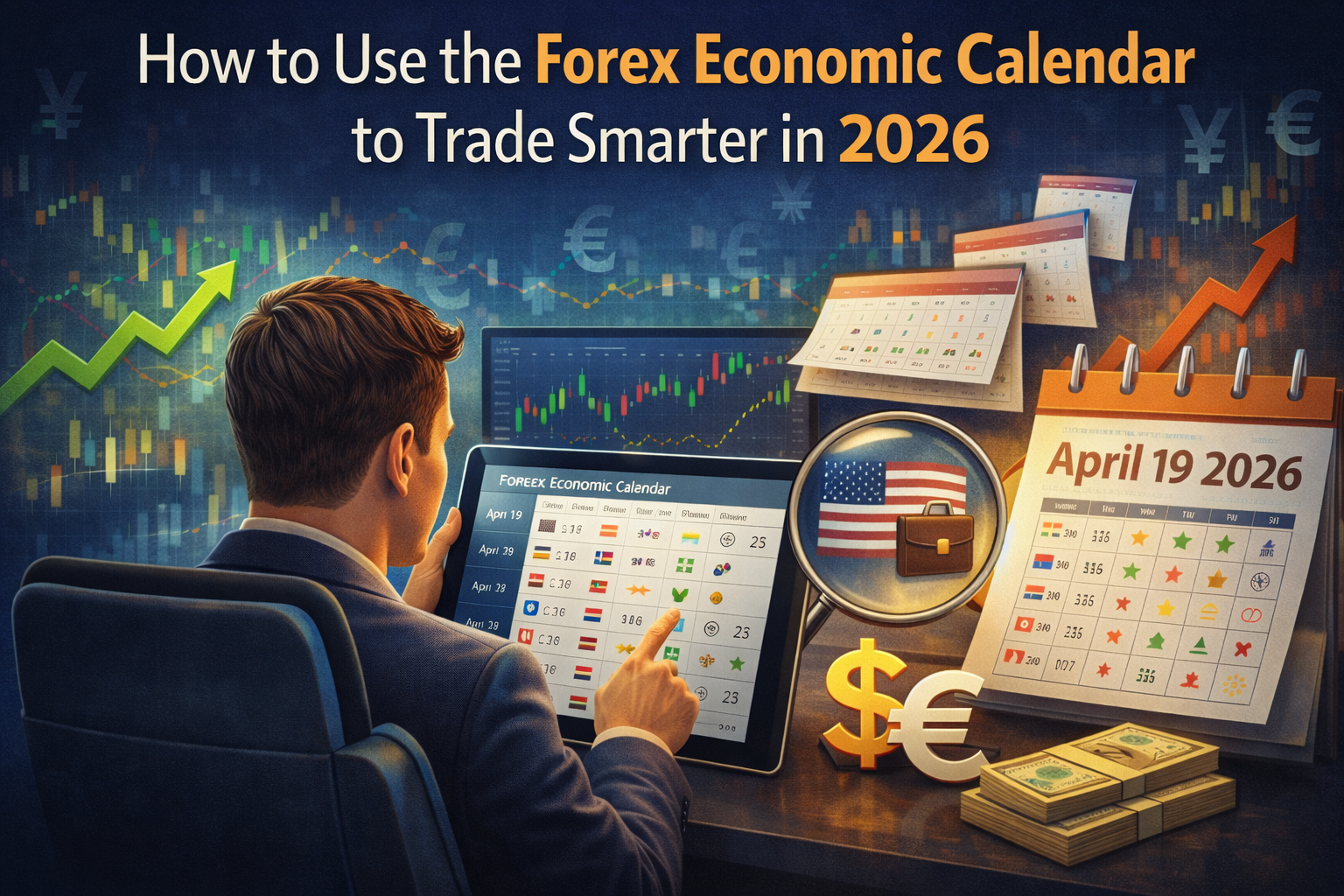
Study the economic calendar every week. Know when the high-impact data releases are scheduled. Know which pairs will be affected. Decide in advance whether you’ll trade around them or stand aside.
Keep a trading journal. Write down every trade: the setup, the entry, the exit, the result, and — most importantly — what you learned. Over time, your journal becomes the most valuable trading resource you own.
📎 Getting started with Forex — BabyPips beginner course
Manual Trading and Automated Systems
As you progress, you’ll encounter the world of algorithmic trading — automated systems (called Expert Advisors or EAs in the MetaTrader ecosystem) that analyse the market and execute trades based on pre-defined rules, entirely without human intervention in the moment.
For pairs like EUR/USD and GBP/USD, where price action is consistent, liquidity is deep, and the market operates around clearly identifiable patterns, automated systems can offer real advantages. They eliminate the emotional decision-making that costs manual traders so dearly. They never miss a setup because they weren’t watching the screen. They execute with mechanical consistency, trade after trade, day after day.
Whether you eventually choose to trade manually, automate, or combine both approaches, the fundamentals covered in this guide remain your foundation. No system — human or algorithmic — can succeed without a solid understanding of how and why currency markets move.
Start Your Forex Journey With an Advantage
You’ve just covered more ground than most beginners cover in their first month of research. You understand what Forex is, how currency pairs work, what moves the market, how trading sessions affect price action, and what habits separate the traders who last from those who don’t.
The next step is putting that knowledge to work — with the right tools alongside you from the start.
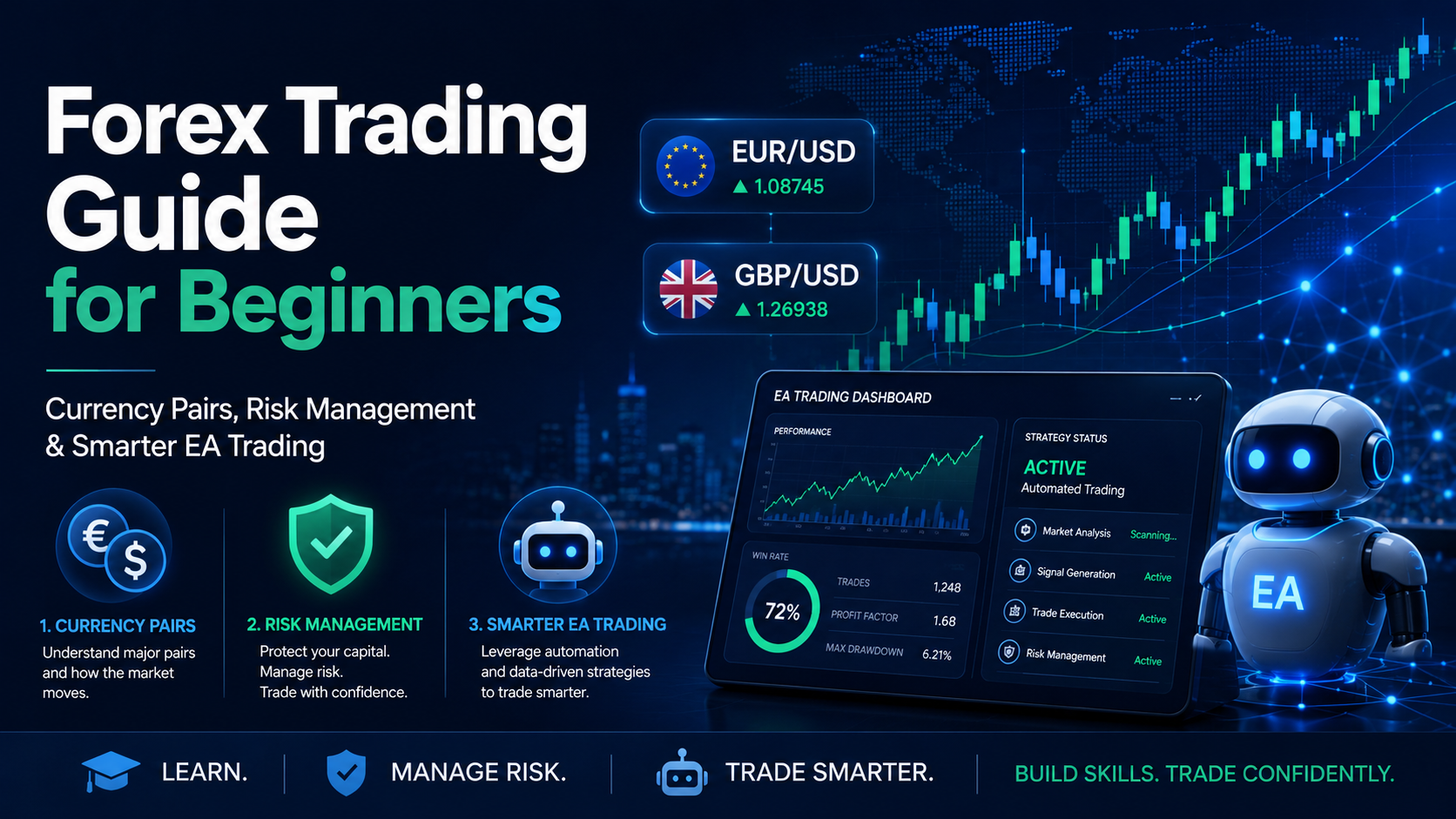
Nexus Forex Trading has built an EA Bot purpose-built for EUR/USD and GBP/USD — the two pairs you now know are the most liquid, most accessible, and most opportunity-rich in the entire Forex market. With built-in risk management and consistent, rules-based execution, it’s designed for traders who want to approach the market with structure, discipline, and a genuine edge.
Claim your exclusive 50% discount today. Enter code NEXUS50FX at checkout and join a smarter way to trade.
👉 Get Started with Nexus Forex Trading →
Risk Disclaimer: Forex trading involves substantial risk of loss and is not appropriate for all investors. Leveraged trading can result in losses that exceed your initial deposit. This article is intended purely for educational purposes and does not constitute financial advice. Always trade responsibly and seek independent guidance if needed.