
Currency Pairs, Risk Management & Smarter Automation
Everything you need to understand how forex markets work — from your first pip to a rules-based EA strategy for EURUSD and GBPUSD.
Most beginner traders enter the forex market armed with a chart, a funded account, and the vague belief that they can read price movement. Few of them last six months. Not because forex is impossibly difficult — but because trading without structure, risk controls, and an honest understanding of the market is how accounts get destroyed. This guide exists to change that.
We will cover how forex markets actually work, what drives currency prices, how to read a trade example from entry to exit, and why disciplined automation — when used correctly — can help bridge the gap between knowing what to do and actually doing it consistently.
What Is Forex Trading?
Forex — short for foreign exchange — is the global market where currencies are bought and sold. Unlike equity markets anchored to a single exchange, forex is decentralised, running continuously across time zones from Sydney through London to New York.
The core mechanics are simple: you are always trading one currency against another. You never buy "a currency" in isolation. You trade a currency pair.
A currency pair expresses the value of one currency relative to another. In EURUSD, the euro (EUR) is the base currency — the one being bought or sold — and the US dollar (USD) is the quote currency — the one used to measure the price. A rate of 1.0850 means one euro buys 1.0850 US dollars.

If you believe the euro will strengthen against the US dollar, you buy EURUSD. If the price rises from 1.0800 to 1.0900, your long position gains 100 pips. If it falls to 1.0700, you lose 100 pips. The direction call is only part of the equation. The other part — often ignored by beginners — is managing how much you stand to lose if you are wrong.
Pips, Lots, and Spreads Explained
Before placing any trade, you need to understand the three units that define every forex position.
Pips
A pip is the standard unit of price movement in most currency pairs. For major pairs like EURUSD and GBPUSD, one pip equals a move in the fourth decimal place. A move from 1.0800 to 1.0810 is 10 pips. Some brokers also quote a fifth decimal (a "pipette"), which represents a tenth of a pip.
Lot Sizes
| Lot Type | Units of Base Currency | Pip Value (approx, EURUSD) | Best For |
|---|---|---|---|
| Standard | 100,000 | ~$10 per pip | Larger funded accounts |
| Mini | 10,000 | ~$1 per pip | Active retail traders |
| Micro | 1,000 | ~$0.10 per pip | Beginners, controlled risk |
| Cent Account | Broker-dependent | Fraction of a cent | System testing, minimal exposure |
The Spread
The spread is the difference between the price a broker will buy from you (bid) and the price they will sell to you (ask). If EURUSD has a bid of 1.0800 and an ask of 1.0802, the spread is 2 pips — a cost you absorb on every trade entry. For high-frequency automated strategies, spreads matter enormously. A system running 20 trades per week on a 3-pip spread is paying 60 pips weekly in execution cost before a single pip of profit is made.
Why EURUSD and GBPUSD?
Of the hundreds of currency pairs available to retail traders, two consistently dominate volume, research, and retail attention: EURUSD and GBPUSD. Here is why that matters for a beginner.
EURUSD — The Benchmark Pair
EURUSD represents the exchange relationship between the world's two largest economic blocs. It is the most traded pair on the planet, which means tighter spreads, more analyst coverage, and generally cleaner technical levels. It is primarily driven by interest rate decisions from the Federal Reserve and European Central Bank, inflation data on both sides, and global risk appetite.
GBPUSD — Higher Volatility, Higher Opportunity
Known as "Cable," GBPUSD tends to move with more energy than EURUSD. UK economic data, Bank of England policy, and broader USD sentiment all play a role. The volatility creates larger potential moves — but also demands more careful position sizing and tighter risk controls. A beginner trading GBPUSD with the same lot size they use for EURUSD will often find the account fluctuating far more than expected.
A trader who studies EURUSD and GBPUSD every day for six months will understand their rhythm better than someone who switches pairs every week chasing the next hot setup.
The case for pair specialisationThe Forex Trading Workflow
Every professional trade — whether placed manually or by an automated system — follows a logical sequence. Understanding this sequence is what separates structured trading from gambling.

Notice that Risk Calculation (step 4) comes before Trade Execution (step 5). This sequencing is deliberate and non-negotiable. Position size should be determined by how much you are willing to lose — not by how much you hope to gain.
A Beginner Forex Trade Example
Let us walk through a practical EURUSD trade to illustrate how the workflow applies to a real decision.
EURUSD is trading near 1.0850. The pair has bounced from a key support level. Momentum indicators are turning positive, and the US dollar has weakened following softer-than-expected economic data. A trader decides to enter long.
| Trade Element | Example Value | Purpose |
|---|---|---|
| Pair | EURUSD | Focus on a liquid major pair |
| Direction | Buy (Long) | Expecting EUR to strengthen vs USD |
| Entry | 1.0850 | Defined entry price |
| Stop Loss | 1.0800 | Maximum acceptable loss: 50 pips |
| Take Profit | 1.0950 | Target gain: 100 pips |
| Risk-to-Reward | 1:2 | Win less than half to break even |
This trade plan is not a prediction. It is a structured decision. The trader does not know if the trade will win. What they do know is exactly how much they are risking and how much they are targeting in return.
Disciplined Trader
"How much can I lose if I am wrong — and can my account absorb that?"
Reckless Trader
"How much can I make if I am right — and how quickly can I get there?"
That difference in thinking explains why many traders blow accounts on trades that initially look like wins.
The Real Risk: Leverage
Leverage is the feature that makes forex accessible to retail traders with small capital — and the mechanism that destroys most of them. Leverage allows you to control a position far larger than your actual deposit.
The Commodity Futures Trading Commission explicitly warns that retail off-exchange forex trading carries significant risk, particularly for traders who do not understand how leverage magnifies both gains and losses.
The same direction, the same stop loss, two very different outcomes depending on how much of the account was risked per trade:
| Trader | Balance | Risk Per Trade | Loss if Wrong (50-pip stop) | Account Survivability |
|---|---|---|---|---|
| Trader A | $1,000 | 1% ($10) | -$10 | Can absorb 90+ consecutive losses |
| Trader B | $1,000 | 10% ($100) | -$100 | Account gone in 10 losses |
Both traders took the same market view. Both were wrong. Only one can survive and learn from the experience. This is not about being timid — it is about staying in the game long enough to improve.
What Moves Currency Prices
Forex prices move because of shifting supply and demand. When more participants want euros, EURUSD rises. When they want US dollars, it falls. Behind those flows sit real-world forces:
Interest Rates
Higher rate expectations attract capital seeking better yield, supporting the currency.
Inflation Data
Inflation shapes central bank decisions, which ripple into currency valuations.
Employment Reports
Labour market strength signals economic momentum and future policy direction.
Central Bank Speeches
Fed, ECB, and BoE commentary can move pairs 50–150 pips within minutes.
Risk Sentiment
In uncertain markets, capital flows toward safe-haven currencies like the USD and JPY.
Technical Levels
Support, resistance, moving averages, and prior highs attract order clusters.
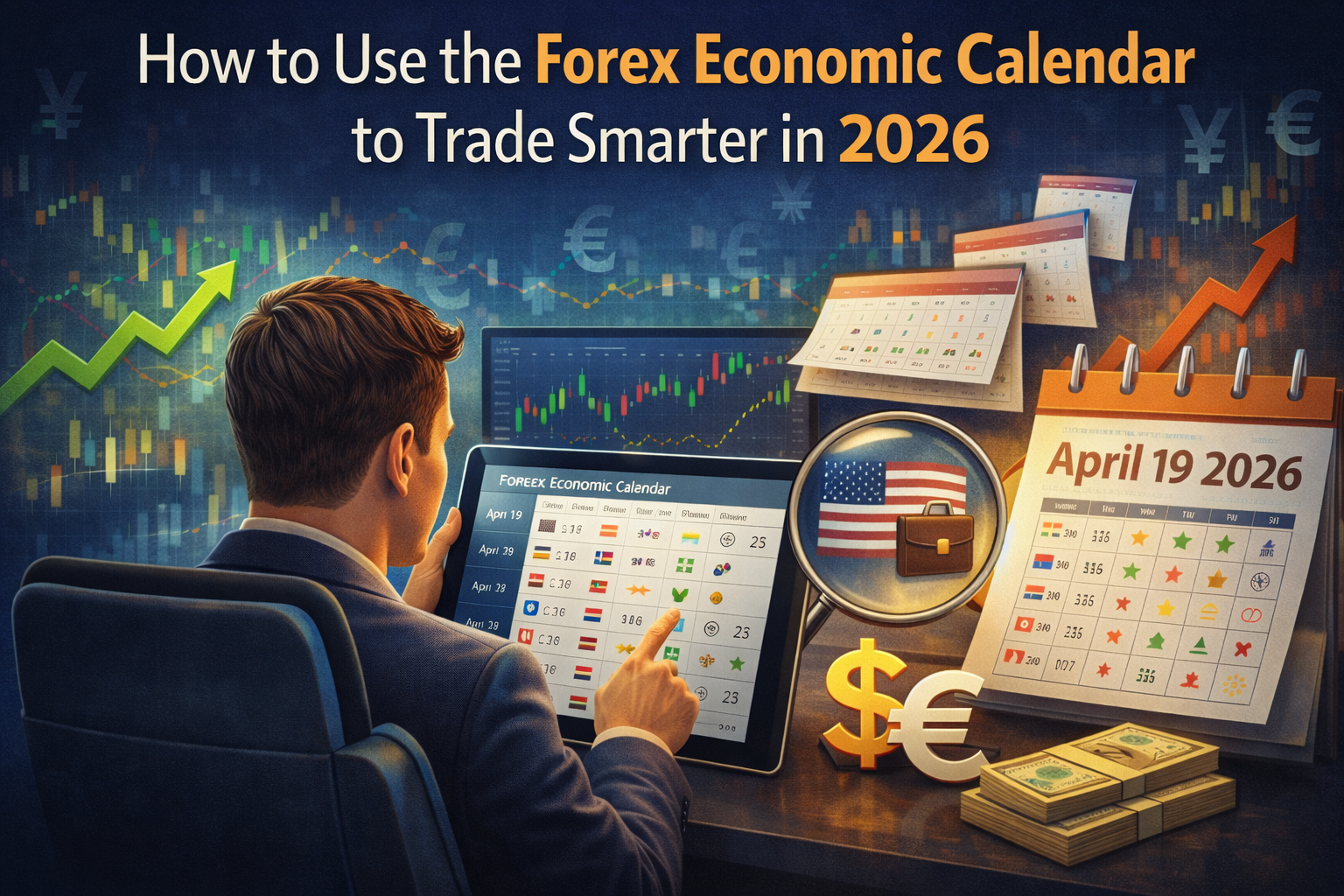
For beginners, understanding which of these is driving price on a given day is more valuable than mastering any single indicator. Check an economic calendar before entering any trade — especially around major data releases.
Why Most Beginners Struggle
The most common reason new traders fail is not an inability to read a chart. It is a lack of repeatable structure. Losing money is part of trading. Losing money without a system means you cannot identify what went wrong or how to improve.
The behaviours that reliably destroy beginner accounts:
- Trading too many pairs simultaneously without mastering any
- Increasing position size after a losing streak to "recover"
- Moving stop losses further away to avoid being stopped out
- Overtrading during major news events without a clear plan
- Chasing price after a large candle has already moved
- Ignoring spread and slippage costs in strategy planning
- Using leverage without a defined per-trade risk percentage
- Abandoning a strategy after a single losing day
A written trading plan eliminates most of these problems by replacing emotional decisions with pre-committed rules. Define your pairs, your session, your risk percentage, your entry criteria, and your exit logic — before the market opens.
Where Automated Forex Trading Fits In
Automated forex trading uses software to execute trades based on predefined rules. In MetaTrader 4, this is called an Expert Advisor (EA). A well-designed EA does not remove market risk. What it removes is the emotional inconsistency that causes most manual trading errors.

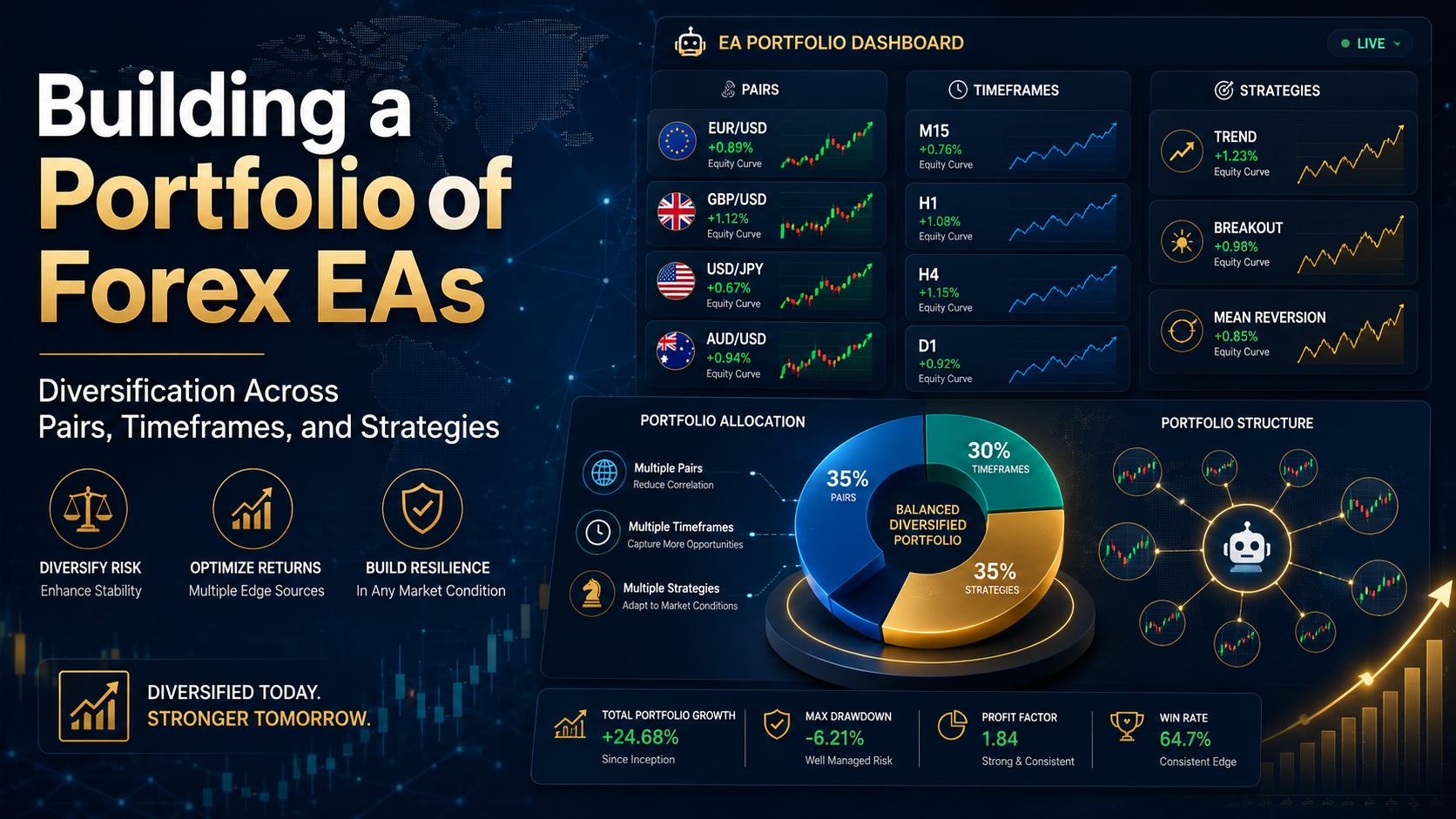
The Nexus Strength EA for EURUSD and GBPUSD is built around this principle. It applies an RSI-driven trading system with AI-assisted optimisation, combining equity protection, disciplined position sizing, and a maximum trade limit to create repeatable execution. The logic does not second-guess itself. It does not revenge trade. It does not skip a setup because the last trade lost.
No EA is a passive income machine. Market conditions shift, spreads widen, broker execution varies, and news events cause sharp spikes. Any automated system must be tested, monitored, and configured with appropriate risk settings. The automation is only as good as the strategy and risk parameters behind it.
Building a Safer Trading Foundation
Before committing real capital, every trader — manual or automated — should work through these five foundations:
-
Learn the basics properly
Understand pairs, pips, spreads, lots, leverage, margin, and stop losses before placing a single trade. The eToro Academy forex guide is a solid starting point for these core concepts.
-
Start with major pairs
EURUSD and GBPUSD offer better liquidity, tighter spreads, and more published analysis than exotic pairs. Specialism beats breadth at the beginner stage.
-
Risk small — deliberately
Many seasoned traders risk 0.5–1% of account balance per trade. Even if you use an EA, start with the lowest available risk profile and only scale after you understand the drawdown behaviour.
-
Demo test before going live
A demo account does not replicate live psychology or real slippage, but it is an essential step for understanding how a system behaves across different market conditions before real money is at stake.
-
Track everything
Record win rate, average win, average loss, maximum drawdown, trade frequency, and time-of-day performance. Without data, you are making decisions based on the emotional weight of the last three trades — not actual patterns.
Recommended Learning Resources
Ready to Trade EURUSD & GBPUSD with a Rules-Based MT4 EA?
Nexus Forex Trading gives you access to professionally built Expert Advisors designed around disciplined execution, preset risk profiles, and transparent trading logic — not promises.
Trading foreign exchange on margin carries a high level of risk and may not be suitable for all investors. Past performance is not indicative of future results. This article is for educational purposes only and does not constitute financial advice. Always conduct your own research and consider your risk tolerance before trading.